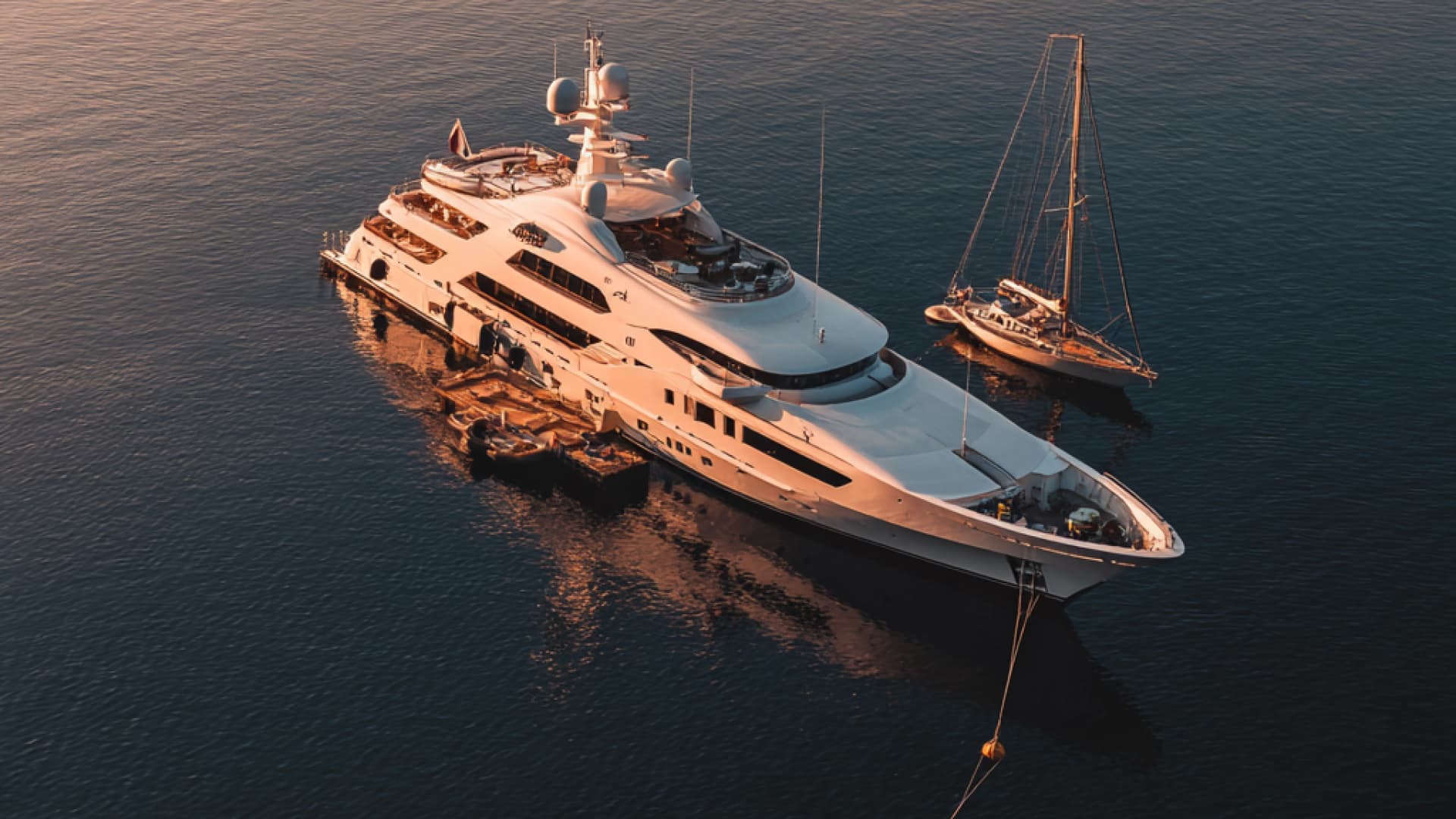
Yas Marina — Formula 1 and superyachts
Yas Marina is unlike any other superyacht facility in the world. Built into the Yas Island F1 circuit, the marina is physically integrated with the racetrack — during the Abu Dhabi Grand Prix, cars pass within metres of the marina pontoons, and guests on their yacht sundeck have a direct sightline to the circuit. The marina has 227 berths and can accommodate yachts up to approximately 150 metres, making it one of the most capable facilities in the Gulf.
Outside the Grand Prix weekend, Yas Marina operates as a high-end residential and visitor marina. The facilities include fuel, water, power (up to 400A), and waste services at the berth. The surrounding Yas Island development — Ferrari World, Yas Waterworld, Warner Bros. World, and the Yas Links golf course — provides shore-side entertainment that is well-maintained and popular with families aboard charter yachts. The marina's architectural centrepiece is the W Abu Dhabi hotel, which spans the circuit as a bridge structure — one of the most photographed buildings in the UAE.
The Yas Marina website provides berth reservations, rate information, and event calendars including Grand Prix berthing packages.
Royal Yacht Club and Al Bateen
The Royal Yacht Club of Abu Dhabi, located at Al Bateen on the city-centre waterfront, is the capital's original yachting address. The club has berths for smaller superyachts (up to approximately 40 metres) and offers a more traditional yacht club atmosphere than Yas Marina — formal dining, a sailing programme, and a membership community that includes prominent UAE families and the diplomatic corps. For yachts that need to be close to the Abu Dhabi city centre — the Corniche, the Louvre Abu Dhabi on Saadiyat Island, the Emirates Palace — Al Bateen is the better location.
Larger yachts that cannot berth at Al Bateen anchor offshore and use tender service to shore. The anchorage off Saadiyat Island, between the Royal Yacht Club and the Louvre, is popular and scenic — the museum's distinctive domed roof is visible from the water, and the beach on Saadiyat's northern shore is accessible by tender. Several excellent restaurants at the Saadiyat Beach Club and the St. Regis are within easy reach.
Sir Bani Yas Island — the Gulf's finest anchorage
Sir Bani Yas is 250 kilometres southwest of Abu Dhabi — approximately 14 hours at 18 knots or a long day's passage at cruising speed. The island was the personal nature reserve of Sheikh Zayed bin Sultan Al Nahyan, the founding father of the UAE, who began a wildlife conservation programme there in the 1970s. Today, over 10,000 animals roam freely across the island's 87 square kilometres — Arabian oryx, sand gazelle, cheetah, giraffe, and hyena among them. It is, without exaggeration, one of the most extraordinary private conservation projects in the world.
Superyachts anchor off the western shore, where the water shelves gently to a sandy bottom at 6–10 metres. There is no marina and no quay — access to the island is by tender to the beach, from where Anantara Resort staff can arrange guided wildlife drives, kayaking through the mangroves, and hiking. The snorkelling on the reef off the island's eastern shore is surprisingly good — hawksbill turtles are resident.
The passage from Abu Dhabi to Sir Bani Yas follows the coast westward past Jebel Dhanna and the industrial port of Ruwais. The final approach to the island, past the smaller Das Island, is unremarkable, but the arrival — a green, hilly island rising from an otherwise flat desert coastline — is genuinely striking. Most itineraries spend one to two nights at anchor before returning to Abu Dhabi or continuing east to Dubai.
Grand Prix week — the superyacht event
The Abu Dhabi Grand Prix, typically the final race of the F1 season in late November, is the premier superyacht event in the Gulf. Yas Marina berths are allocated months in advance, with premium positions alongside the circuit commanding significant premiums over standard rates. The event attracts 30–50+ superyachts, many of which reposition specifically from the Mediterranean for the race weekend.
The atmosphere during Grand Prix week is unique — the combination of a night race (the circuit is illuminated, and the race finishes under floodlights), the marina setting, and the post-race concerts creates a social intensity that rivals Monaco's Grand Prix, though the character is different. Monaco is tradition and heritage; Abu Dhabi is spectacle and engineering. Premium Yas Marina positions command rates of AED 10,000–50,000+ per night for the race weekend, and allocation requires relationships established well in advance.
For yachts that miss Grand Prix berthing at Yas Marina, the Abu Dhabi Corniche and Al Bateen offer overflow anchorage with transfer to Yas Island by car — approximately 30 minutes. Several charter yachts offer Grand Prix packages that include circuit access, hospitality, and post-race events — these are typically marketed 6–12 months in advance through major charter brokerages.
The cultural layer — Louvre and beyond
Abu Dhabi's cultural investment is transforming the emirate into something more than a wealth-and-infrastructure story. The Louvre Abu Dhabi, designed by Jean Nouvel on Saadiyat Island, opened in 2017 and houses a collection spanning ancient civilisations through contemporary art under a 180-metre domed roof that filters sunlight into what Nouvel calls a "rain of light." The Guggenheim Abu Dhabi, designed by Frank Gehry, is under construction on the same island. The Natural History Museum Abu Dhabi and the Zayed National Museum are also in development.
For superyacht visitors, these cultural attractions are accessible by tender from the Saadiyat anchorage or by car from Al Bateen — a 10-minute drive. The Sheikh Zayed Grand Mosque, one of the largest mosques in the world, is open to non-Muslim visitors and is architecturally extraordinary — white marble, gold calligraphy, and a 12,000-person prayer hall. The Corniche — Abu Dhabi's waterfront promenade — runs for 8 kilometres and is the city's public face to the sea.
The Department of Culture and Tourism Abu Dhabi publishes event calendars, exhibition schedules, and visitor information for all cultural institutions.
When to visit
November through March is the optimal window. The Grand Prix in late November is the anchor event. December through February offers the best weather — warm days (22–28°C), cool evenings, and minimal humidity. Art Abu Dhabi (typically November) and various cultural events at Louvre Abu Dhabi, Manarat Al Saadiyat, and the Warehouse421 gallery district add depth to the winter calendar.
April is still viable but warming rapidly — daytime temperatures push past 35°C by mid-month. May to September follows the same pattern as Dubai: prohibitively hot for outdoor living, with most visiting yachts departing by late April. The year-round residents — predominantly locally owned vessels — remain at Yas Marina or Al Bateen through the summer months.
Logistics — customs, fuel, and provisioning
Abu Dhabi customs clearance follows the same UAE-wide framework as Dubai. The TAMM government services platform handles permit applications and regulatory filings for Abu Dhabi emirate. A registered agent can pre-clear documentation for arriving vessels. Fuel is available at Yas Marina and at commercial fuelling facilities near Musaffah industrial area. Provisioning is excellent — Abu Dhabi's wholesale markets and specialist suppliers can match Dubai's range, and several provisioning companies offer berth-side delivery at Yas Marina and Al Bateen.
The passage between Dubai and Abu Dhabi is 90 nautical miles and takes 5–8 hours at typical superyacht cruising speeds. Many yachts visit both cities during a UAE stay — Dubai for the social infrastructure and retail, Abu Dhabi for the Grand Prix, Sir Bani Yas, and the cultural calendar. A 10–14 day UAE itinerary comfortably covers both emirates with time at anchor and exploration of the Musandam Peninsula to the north.
For the Dubai perspective, see the Dubai destination guide. For Indian Ocean options from the Gulf, see the Maldives guide. For the full destinations overview, see the destinations hub.