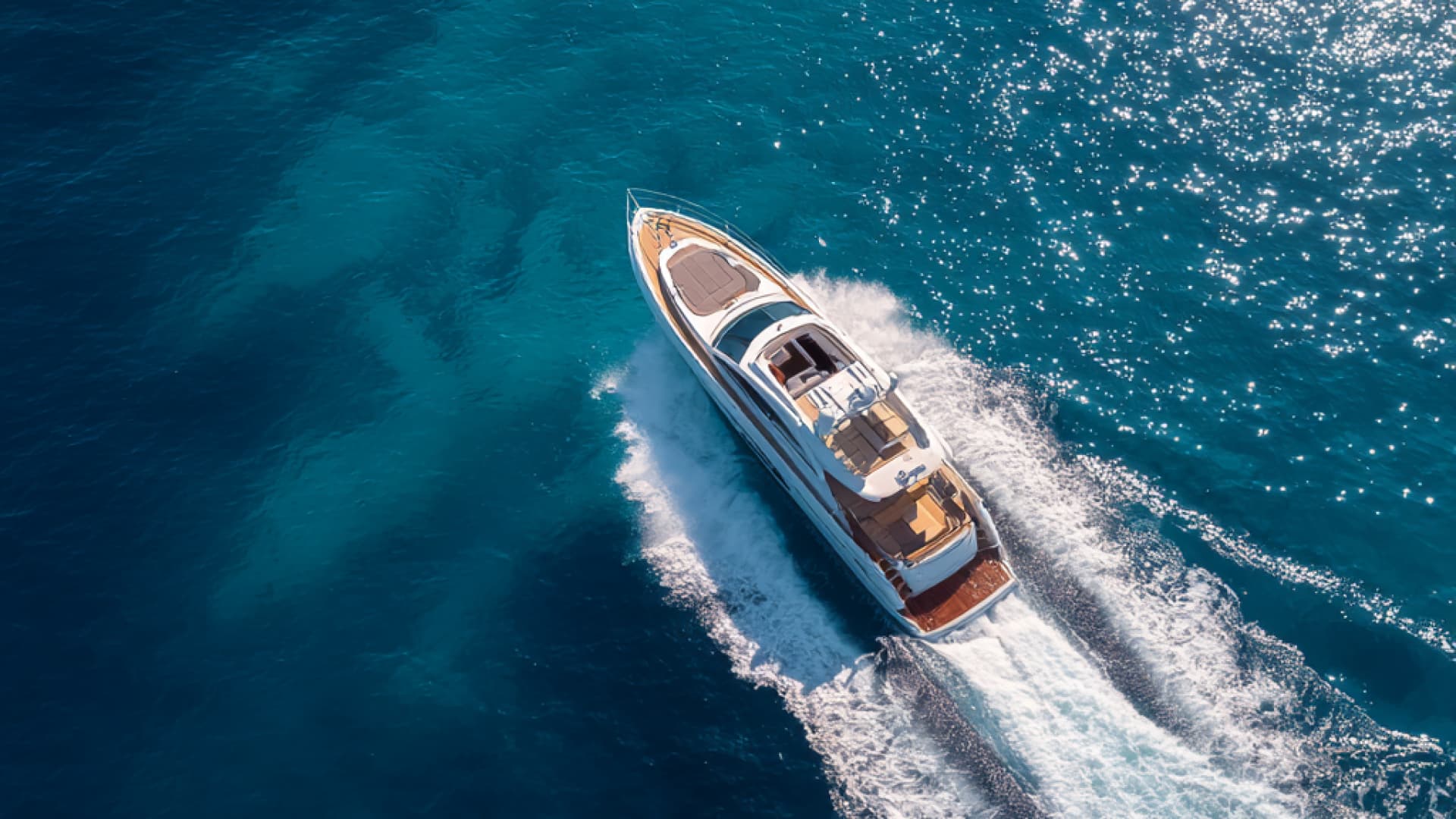
What is a superyacht charter?
A superyacht charter is the rental of a professionally crewed private yacht for a defined period — typically one week or more. Unlike a cruise ship, a charter yacht operates entirely to the charterer's schedule and itinerary. The captain proposes, the charterer decides. Where you go, when you leave, where you anchor for lunch — all of it is determined by you and your party, within the constraints of weather and seamanship.
The vessel comes with a full crew — captain, chef, stewardesses, and deckhands — whose sole purpose is to make your charter exceptional. The chef shops at local markets each morning and cooks to your preferences. The stewardesses manage the interior, the service, and the water toy programme. The captain and deckhands handle everything operational. You arrive as a guest on your own private ship.
The MYBA charter agreement is the industry standard contract that governs the arrangement — covering the base rate, the Advance Provisioning Allowance, cancellation terms, and the responsibilities of both owner and charterer. Any reputable charter broker will use it.
Top charter destinations
The superyacht charter world operates on two primary seasons: Mediterranean summer (May–October) and Caribbean winter (November–April). Within these, certain destinations define the market.
In the Mediterranean, the South of France — including Monaco, Antibes, Cannes, St Tropez — is the prestige address. It is the most expensive, the most social, and the most photographed. The Greek Islands offer the alternative: more affordable, more varied, and for many charterers more genuinely beautiful. Italy — the Amalfi Coast, Sardinia, Sicily — sits between the two in character and price, with arguably the finest food of any charter destination in the world.
In the winter, the Caribbean dominates — the British Virgin Islands for variety, St Barths for prestige, the Bahamas for the extraordinary water. The Indian Ocean (Maldives, Seychelles) is a growing alternative for charterers seeking something beyond the traditional circuits.
How charter pricing works
Superyacht charter pricing has two components: the base charter rate and the Advance Provisioning Allowance (APA). The base rate covers the yacht and crew for the charter period — it is fixed and paid in advance. The APA is a float that covers running expenses: fuel, food and beverages, marina fees, harbour dues, and water toy expenses. The APA is typically 25–35% of the base rate.
At the end of the charter, the captain presents a full accounting of all expenses against the APA. Any surplus is returned to the charterer; any shortfall is invoiced. The APA system means the base rate is genuinely comparable between yachts — the variables are in how you use the vessel.
| Vessel size | Weekly rate (Med, peak) | APA estimate |
|---|---|---|
| 30–40m | €50,000–120,000 | €15,000–40,000 |
| 40–55m | €120,000–250,000 | €35,000–80,000 |
| 55–75m | €250,000–500,000 | €75,000–160,000 |
| 75m+ | €500,000–1,500,000+ | €150,000–500,000+ |
What's included — and what isn't
Included in the base rate: The yacht, the full crew, all onboard amenities, and standard water toys (typically tenders, jet skis, paddleboards, snorkelling equipment). The crew's salaries, accommodation on the yacht, and all operational costs are covered by the owner — you pay for the yacht's use, not its operation.
Covered by the APA: All fuel, all food and beverages, marina and harbour fees, port taxes, communications (satellite phone, internet), laundry, and any specialist water sport equipment rentals. The APA is not a tip — gratuity for the crew is separate and customary at 5–15% of the base rate for exceptional service.
The MCA Large Yacht Code sets the safety standards that all commercially operated charter yachts must meet — crew certification, safety equipment, and operational procedures. Verify that any yacht you charter holds current commercial certification.
How to book a charter
Charter bookings are made through a charter broker — a specialist who represents the charterer's interests in selecting the right vessel, negotiating the rate, and managing the MYBA agreement. Most charter brokers do not charge the charterer directly; their commission (typically 15–20% of the base rate) is paid by the yacht owner.
The booking process: brief the broker on your party size, preferred dates, destination, and budget. The broker presents a shortlist of suitable vessels with specifications and rates. You visit or review in detail, select a yacht, and the broker negotiates and documents the charter agreement. A deposit of 50% of the base rate plus the APA is typically due on booking, with the balance 30 days before departure.
For a detailed guide to the booking process, see our how to book a yacht charter guide. For charter pricing in detail, see our charter pricing guide. For destination-specific guidance, see the Boat International charter guide.
Choosing the right yacht
The right charter yacht depends on five factors: party size, intended itinerary, priorities (social vs private, active vs relaxed), vessel type preference (motor yacht vs sailing yacht vs explorer), and budget. A good charter broker will navigate all five simultaneously.
For those considering a Lürssen or Feadship charter — the highest tier of the market — see our profiles of Lürssen charter yachts including Flying Fox and Ace, and Feadship charter yachts including Savannah. For those considering ownership after chartering, see our guide to buying a superyacht.
Chartering before buying is the industry's most consistent piece of advice to first-time buyers. A week on a 50-metre motor yacht in the South of France tells you more about what you actually want in a purchase than any number of boat shows.