Marinas — Yacht Haven, Ao Po, and Royal Phuket
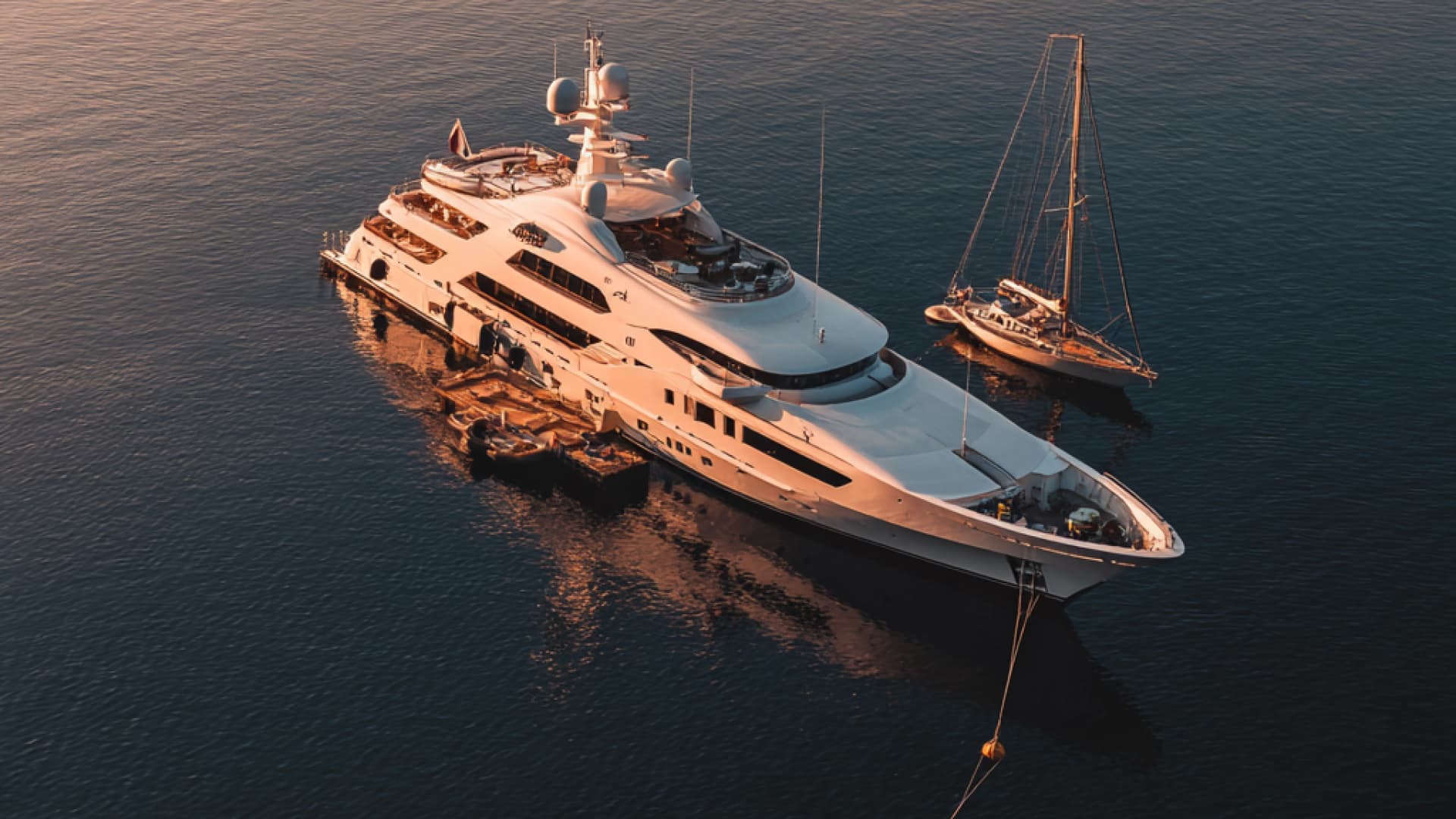
Yacht Haven Marina at Laem Phrao, on Phuket's northeastern tip, is the island's primary superyacht facility and the most capable marina in Southeast Asia. The marina can accommodate yachts up to 80+ metres alongside, with deep-water berths, shore power, fuel, and full provisioning services. Critically, Yacht Haven also operates a haul-out facility with a 300-tonne travel lift — the largest in the region — making it the default choice for yachts combining a season in Asia with scheduled maintenance or refit work.
Ao Po Grand Marina, on the east coast approximately 20 minutes south of Yacht Haven by road, offers a quieter alternative with direct water access to Phang Nga Bay. The setting is more scenic — the marina opens onto the dramatic limestone karst landscape — and it is the preferred departure point for Phang Nga cruising. Berth capacity is more limited than Yacht Haven, and facilities for larger superyachts are less extensive, but for vessels under 50 metres it is an excellent base.
Royal Phuket Marina, on the east coast near the Boat Lagoon, caters primarily to vessels under 35 metres. The surrounding area has restaurants, chandleries, and marine service providers, and the Boat Lagoon itself — a separate facility nearby — has additional haul-out and repair capabilities for smaller yachts. For superyachts, Yacht Haven remains the clear first choice.
Phang Nga Bay and the Andaman cruising grounds
Phang Nga Bay is the reason most superyachts come to Phuket — and the reason many come back. The bay is a 400-square-kilometre expanse of sheltered water studded with over 100 limestone karst islands, some rising vertically 300 metres from the sea. The geological formations are extraordinary: sheer-sided towers, caves accessible by tender or kayak, hongs (collapsed cave systems creating hidden lagoons), and shallow mangrove-fringed channels between islands. The water is calm, the holding is good on mud and sand, and the anchorages are naturally sheltered.
The most popular superyacht anchorages in Phang Nga include Koh Hong (a stunning lagoon accessible through a narrow channel), Koh Panak (caves and hongs explorable by kayak), and the area around James Bond Island (Khao Phing Kan — made famous by The Man with the Golden Gun, now a major tourist attraction and less appealing for those seeking solitude). Further from the tourist routes, the northern reaches of the bay toward Krabi offer quieter anchorages and fewer day-trip boats.
The Similan Islands, 60 nautical miles northwest of Phuket in the open Andaman Sea, are Thailand's premier diving destination — a chain of nine granite islands with visibility exceeding 30 metres and reef systems that attract manta rays, whale sharks, and dense schools of tropical fish. The Similans are a national park; anchoring is restricted to designated zones, and park fees apply. The crossing from Phuket takes 4–6 hours depending on sea conditions and is only advisable during the northeast monsoon season (November–April).
Customs, visas, and Thai maritime regulations
Foreign-flagged yachts entering Thailand must clear three authorities: Immigration (passports and visas), Customs (vessel documentation and temporary import), and the Marine Department (vessel safety inspection and navigation permit). Phuket is the standard entry point for yachts arriving from the west (Indian Ocean, Maldives, Sri Lanka). Yachts arriving from Malaysia typically clear at Langkawi before crossing into Thai waters at Satun or Phuket.
A vessel temporary import permit is issued for up to 6 months and is renewable. The vessel must depart Thai waters before the permit expires or face penalties. Crew and guests from most Western nationalities receive visa exemptions of 30–60 days on arrival. A registered Thai agent — available through the marinas — significantly simplifies the clearance process and is recommended for all superyachts, particularly first-time visitors. Agent fees are modest (typically THB 10,000–20,000) relative to the time and complexity saved.
Refit and maintenance — Southeast Asia's yard
Phuket has become the default refit destination for superyachts operating in Asia, and increasingly for Mediterranean-based yachts that reposition east specifically for the cost advantage. The combination of skilled labour at significantly lower rates than European yards (typically 40–60% below Northern European pricing), year-round warm and dry conditions (during the northeast monsoon season), and a growing ecosystem of marine service providers makes Phuket competitive for everything from routine annual maintenance to major refit programmes.
Yacht Haven's 300-tonne travel lift handles the haul-out. Specialist contractors operating from the Boat Lagoon and Yacht Haven cover hull work, painting (both cosmetic and antifouling), mechanical and engineering systems, electrical, hydraulics, and interior joinery. Teak work is a particular strength — Thai craftsmen produce teak deck replacement and interior cabinetry at a quality level that matches European specialists at a fraction of the cost. Several international project management companies maintain Phuket offices to oversee major refit programmes on behalf of owners and management companies.
The standard pattern for Mediterranean-based yachts is to reposition to Phuket in November, complete a 3–5 month refit over the winter, and return to the Mediterranean via the Indian Ocean and Suez for the summer season. This combines the cost advantage of Asian labour with a cruising season in the Andaman Sea and potentially the Maldives en route.
Cruising from Phuket — Similan, Langkawi, Mergui
Beyond Phang Nga Bay and the Similans, Phuket is the launch point for several exceptional cruising itineraries. Koh Phi Phi (3–4 hours south) offers dramatic scenery and popular anchorages, though the area is busy with tourist boats during the day — evening and early morning are the best times. Krabi and Railay Beach (2–3 hours east across Phang Nga Bay) provide striking limestone cliffs and sheltered anchorages.
Langkawi (Malaysia), 120 nm south, is a common cross-border destination — the duty-free island offers provisioning at competitive prices, excellent marinas (Telaga Harbour, Royal Langkawi Yacht Club), and a change of scenery. Many yachts use Langkawi as a visa-run destination, exiting and re-entering Thailand to reset the vessel import permit.
The Mergui Archipelago in Myanmar, 200 nm north of Phuket, is one of the last genuinely untouched cruising grounds on earth — over 800 islands with pristine beaches, coral reefs, and indigenous Moken sea nomad communities. Access requires a Myanmar sailing permit (arranged through specialist agents, 4–6 weeks lead time), and infrastructure is essentially non-existent — no fuel, no provisioning, no marina facilities. Yachts must be fully self-sufficient. For those willing to accept the logistical constraints, the Mergui is an extraordinary experience — genuinely remote in a way that almost no other cruising destination in the world can match.
Season and the monsoon
The Andaman coast season runs from November to April, governed by the northeast monsoon. During this period, Phuket's west coast beaches have calm seas and excellent visibility, Phang Nga Bay is at its best, and the Similans are accessible. The Asia Superyacht Rendezvous, typically held in December or January, is the social highlight of the Asian superyacht calendar and draws 15–25 superyachts to Phuket for a three-day regatta and social programme.
The southwest monsoon (May to October) brings heavy rain to Phuket's west coast, rough seas in the Andaman, and significantly reduced visibility underwater. Most charter yachts reposition — either west to the Maldives or Dubai, or south to Malaysia and Indonesia. However, Phuket's east coast (Phang Nga Bay, Ao Po) remains more sheltered during the southwest monsoon, and Yacht Haven continues to operate year-round for refit and maintenance work.
The Tourism Authority of Thailand provides seasonal travel advisories, event calendars, and practical visitor information for Phuket and the Andaman coast.
Provisioning and crew
Phuket provisioning is excellent for an Asian base. The island has multiple wholesale markets, a Makro (commercial wholesale), and specialist marine provisioning companies that deliver to the marina berth. Thai produce — particularly seafood, tropical fruit, and fresh herbs — is outstanding and inexpensive. Western provisions (cheese, wine, specialty meats) are available but at import prices; for extensive Western provisioning, Singapore (2-day passage or air freight) is the regional hub.
For crew, Phuket is a popular port. The island's combination of low cost of living, warm climate, good beaches, excellent restaurants (both Thai and international), and reliable internet makes it one of the most comfortable crew stops in Asia. Crew accommodation near the marinas is affordable — significantly below Mediterranean rates. Phuket International Airport (HKT) has direct connections to Bangkok, Singapore, Kuala Lumpur, Hong Kong, and seasonal European routes, making crew rotation straightforward.
For the wider Asian and Indian Ocean cruising context, see the Maldives guide and the Dubai guide. For all destinations, see the destinations hub.