The industry definition
The most widely used industry definition is any privately owned vessel over 24 metres (79 feet) in length overall (LOA). This threshold corresponds broadly to the point at which a vessel requires a professional crew to operate safely and efficiently. SuperYachtReview focuses on vessels 30 metres and above — the segment where full-time crew, bespoke construction, and significant capital value combine.
The term itself has no formal legal status in most jurisdictions. Regulatory frameworks refer to gross tonnage and usage category (private or commercial) rather than vessel type. What the market calls a "superyacht" is defined by convention rather than law.
Size thresholds explained
Within the superyacht category, vessels are often further segmented by size:
- 24–30 metres: Entry-level superyachts. Typically owner-operated with a small professional crew of 2–4. Production or semi-custom construction.
- 30–50 metres: The most active segment of the market. Full professional crew of 5–12. Mix of production, semi-custom and custom construction.
- 50–80 metres: Large superyachts. Fully bespoke construction at specialist yards. Crew of 12–25. Significant capital and running cost.
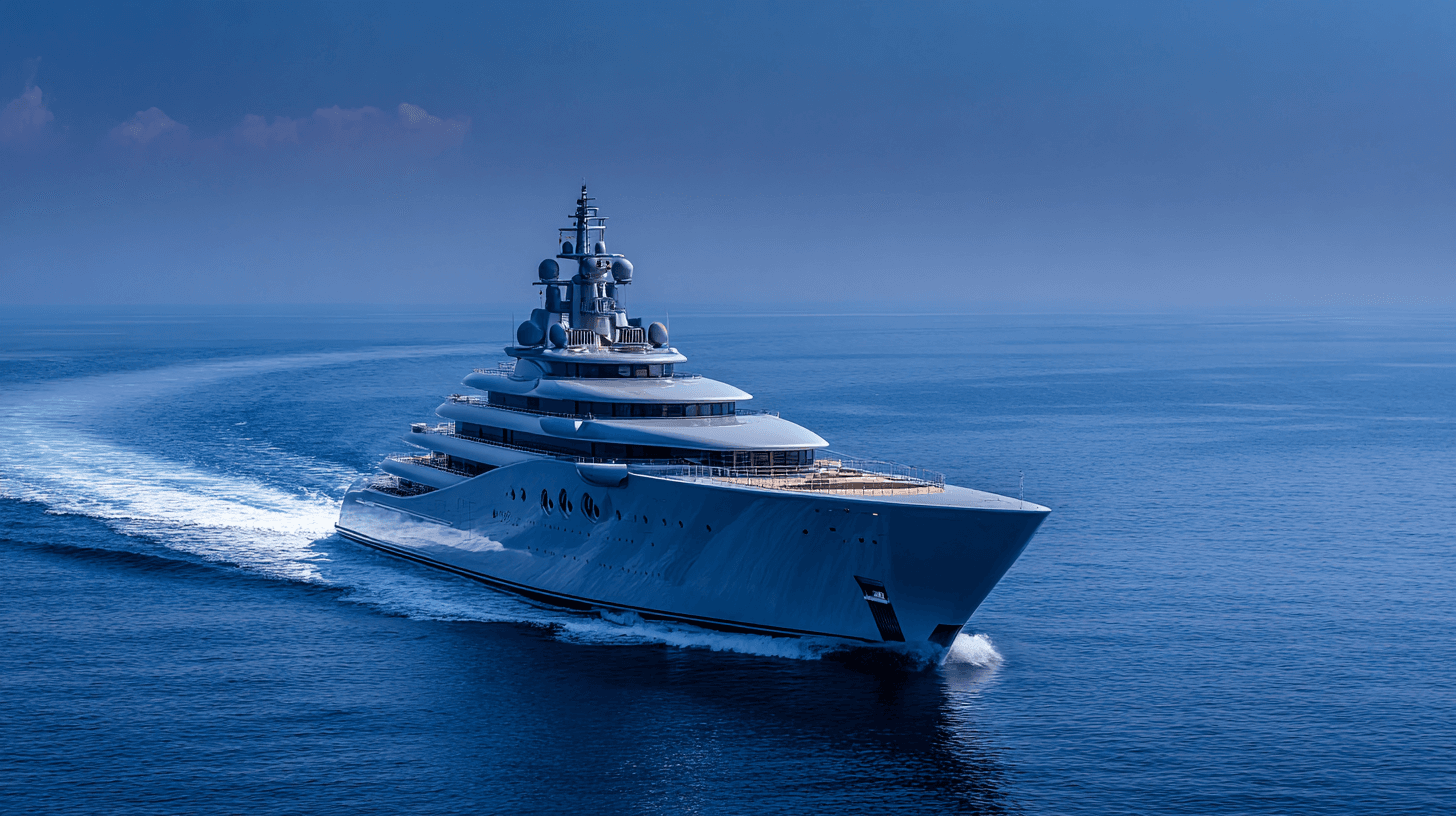
- 80 metres+: Megayacht territory. Custom construction at the world's top yards — Lürssen, Feadship, Oceanco. Crew of 25–80. Operating costs of €3–10 million annually.
Superyacht vs megayacht
The term "megayacht" has no formal definition and is used inconsistently across the industry. It is generally applied to vessels above 60–70 metres, where the scale, complexity, and cost of the vessel place it in a distinct category. Some sources use 80 metres as the threshold. For practical purposes, megayacht refers to the upper tier of the superyacht market — the vessels built by Lürssen, Feadship, and Oceanco that represent the pinnacle of private marine construction.
Classification and regulation
Superyachts are regulated by the flag state under which they are registered. A Cayman Islands-flagged vessel follows the requirements of the Cayman Islands Shipping Registry; a Malta-flagged vessel follows the Malta Transport Authority. Flag state requirements set standards for safety equipment, crew certification, and operational procedures.
Classification — carried out by independent societies including DNV GL, Lloyd's Register, and RINA — is separate from flag state regulation but complementary. A class certificate confirms that the vessel's construction and ongoing condition meets the society's standards. Most lenders require class as a condition of finance; most insurers require it as a condition of coverage.
Commercially operated superyachts (charter yachts) must additionally comply with the MCA Large Yacht Code (LY3) or equivalent national framework, which imposes additional crew, safety, and operational requirements.
Types of superyacht
Within the superyacht category, several distinct types exist:
- Motor yachts: The dominant type. Powered by diesel or gas turbine engines. Displacement, semi-displacement and planing hull forms.
- Sailing yachts: Wind-powered with auxiliary engines. Favoured by owners who prioritise the sailing experience. Complex rigging and stability management.
- Explorer yachts: Motor yachts designed for extended range and high-latitude cruising. Ice-class hulls, large fuel capacity, expedition-focused equipment.
- Catamarans: Twin-hull vessels offering stability and shallow draft. Increasingly popular in the 24–50m range.
- Classic yachts: Historic vessels, typically pre-1980. Value driven by heritage, design, and condition rather than specification.
To explore vessels across all these categories, see our superyachts for sale listings and the 100 largest yachts in the world.