Positano and the western Amalfi Coast
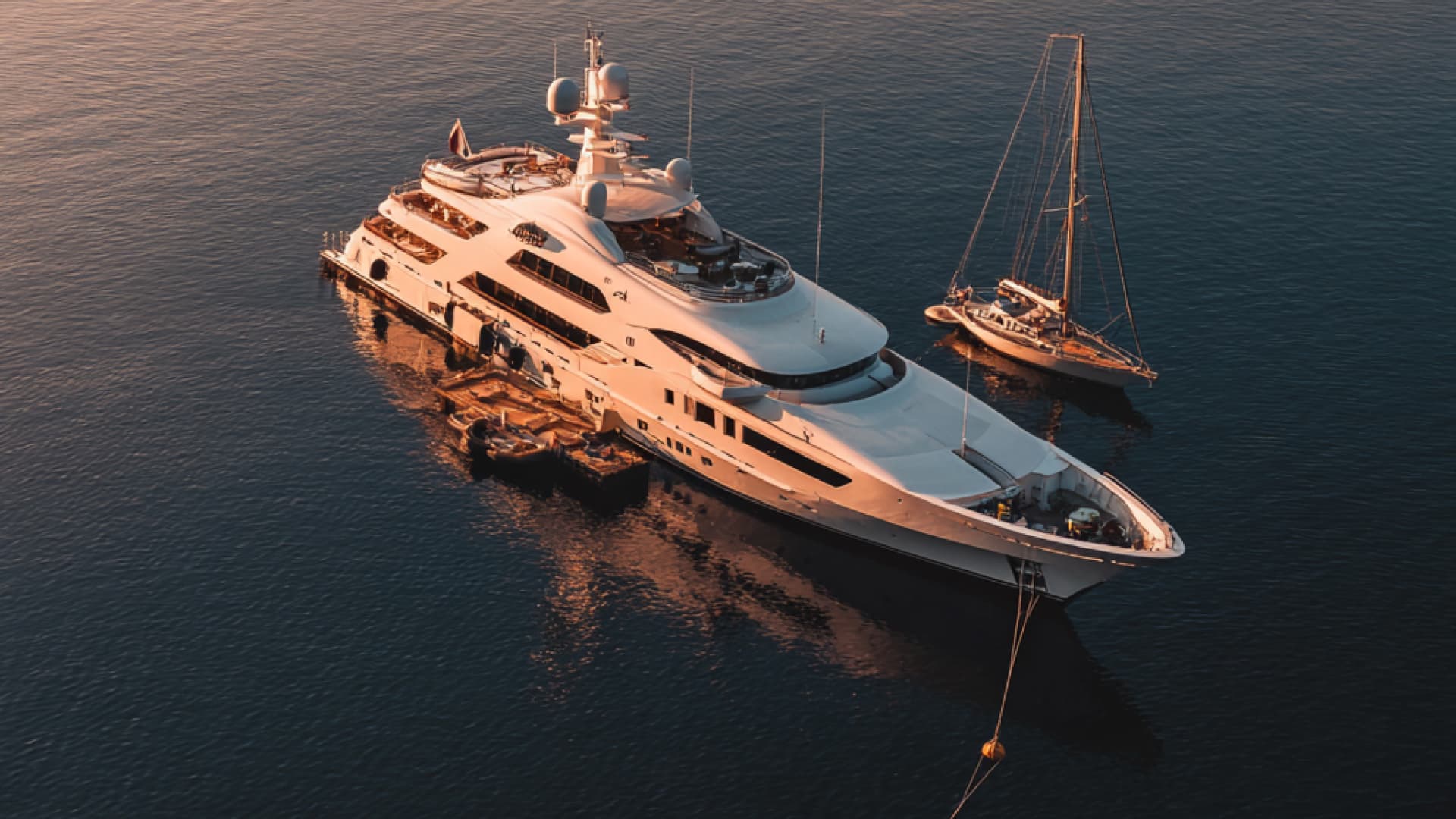
Positano is the Amalfi Coast's most photographed village — the cascade of white and pastel buildings tumbling down the cliff face to the small beach is one of the most reproduced images in Mediterranean travel. From the water, the approach by superyacht amplifies everything: the scale of the cliff becomes comprehensible only when you are small against it, and the village's famous visual impact is at its maximum when seen from the anchorage in the bay below.
The Positano anchorage is in the bay directly below the village, at depths of 15–25 metres with good sand holding. The tender runs to the Spiaggia Grande beach, from which the village is a short walk up the stepped streets. The beach itself is narrow and gets busy in peak season — a tender arrival gives you the advantage of approaching without the traffic and crowds that come by road. The western coast from Positano to Praiano offers a series of smaller coves — Marina di Praia is the finest, a narrow inlet between high cliffs with a small beach and a legendary seasonal restaurant.
Amalfi town and Ravello
Amalfi town — the medieval trading republic that gave the coast its name — is the operational centre of the coastline. The harbour accepts small superyachts alongside the quay, but the anchorage in front of the town is exposed to southerly swell and less comfortable than Positano's bay. The town itself is worth a tender excursion for the Duomo di Sant'Andrea, the paper museum (the region was Italy's centre of paper production in the medieval period), and the shops along the main street.
Ravello sits 350 metres above the coast on a ridge between two valleys — it cannot be accessed from the water directly, but a short drive from Amalfi town brings you to one of the finest hill towns in southern Italy. Villa Cimbrone and Villa Rufolo, both with gardens that end at terraced viewpoints over the coast, are among the most beautiful gardens in Europe. The annual Ravello Festival (July–September) brings international classical music performances to the Villa Rufolo's clifftop stage.
Capri — the essential stop
Capri is technically the Bay of Naples, not the Amalfi Coast, but it is so integral to any Amalfi itinerary that treating it separately would be artificial. The island sits 20 kilometres offshore from the Sorrentine Peninsula, about 45 minutes from Positano at cruising speed. The approach — rounding the western headland to reveal the Faraglioni rock formations and the town of Capri above — is one of the finest arrival experiences in the Mediterranean.
Marina Grande, Capri's main harbour, has limited berths for superyachts and the town pier is reserved for the hydrofoil and ferry services. Anchoring off is the standard arrangement for larger vessels — the area east of the Faraglioni, in the bay off Marina Piccola, offers reasonable holding and access to the southern coast's beaches by tender. The Blue Grotto (Grotta Azzurra) is accessible by rowing boat from Marina Grande — tenders are not permitted inside. The Marina di Capri authority handles berth enquiries for vessels that require dockside access.
Navigation and logistics
The Amalfi Coast is beautiful but logistically demanding. The coastline faces southwest and is exposed to swell from this direction — conditions can deteriorate quickly when weather is building from the south. The main anchorages are open roadsteads without the protection of a breakwater; in a southerly swell, they become uncomfortable and occasionally untenable.
The Italian Coast Guard — the Guardia Costiera — maintains regulations on anchoring in certain protected areas along the coast. Your captain will have current information on permitted anchoring zones. For vessels above 50 metres, some anchorages are impractical due to depth or swing radius; your captain will plan itineraries accordingly. Provisioning is best done from Salerno (30 km to the east) or from the tender at Positano and Amalfi town.
Season and conditions
The Amalfi season runs from May to October. June is the finest month — the coastal road has not yet reached summer-peak congestion, the beaches are manageable, the sea temperature is rising quickly, and the light has the golden quality that makes the coastline look exactly as it does in the photographs. September and October offer excellent weather with rapidly diminishing crowds — and the Ravello Festival extends the cultural calendar into autumn.
The Amalfi Coast fits naturally into a broader Italian superyacht itinerary that includes Sardinia to the north and Sicily to the south. For the full context of a Mediterranean summer, see our Sardinia guide, the destinations hub, and the charter overview. Boat International's Amalfi Coast coverage provides additional editorial depth.