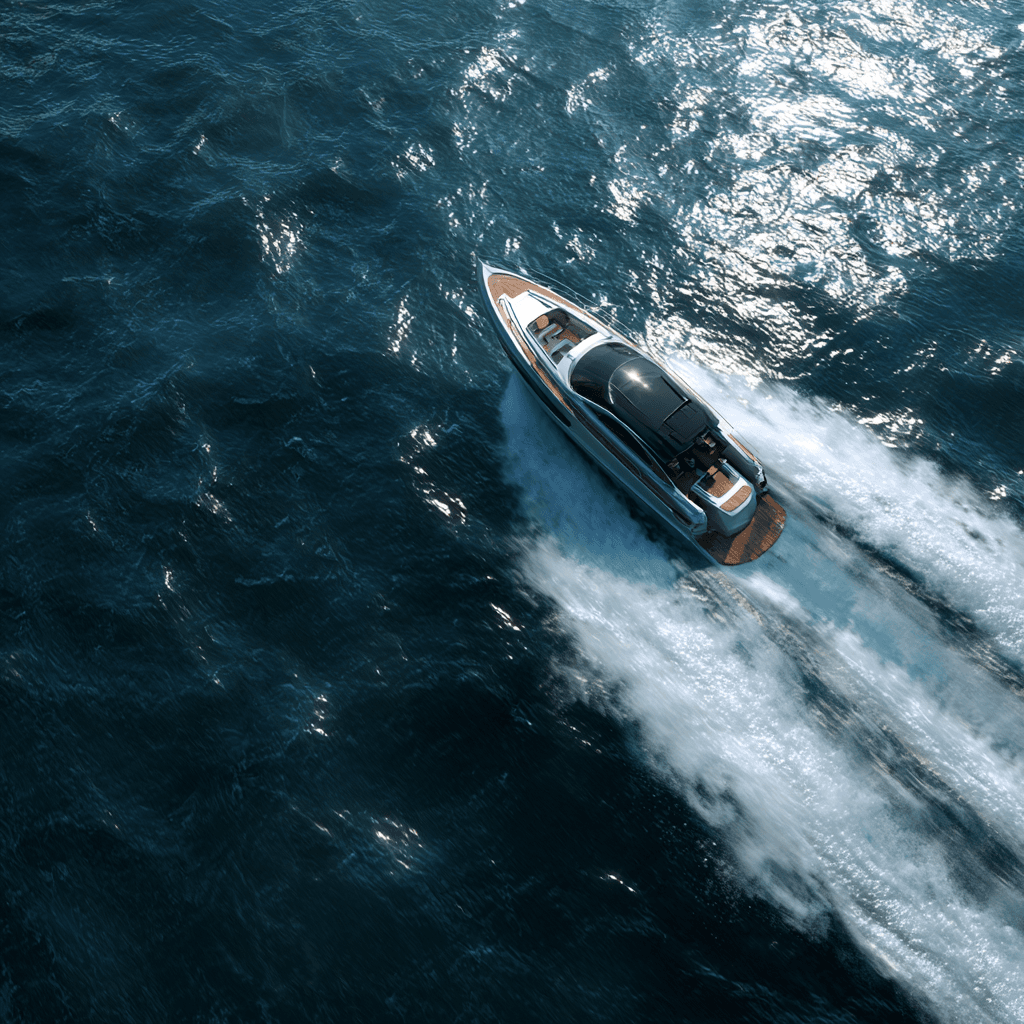
Purchase price by size
Superyacht pricing is not a linear scale — it is exponential. A 50-metre yacht does not cost twice as much as a 25-metre yacht; it costs five to ten times as much, because every additional metre increases structural complexity, systems requirements, crew needs, and the sheer volume of materials and labour involved. The following ranges reflect current market conditions as of 2026 and cover both new build and brokerage pricing.
| Size category | New build range | Brokerage range | Typical crew |
|---|---|---|---|
| 24–30m | €3–15M | €0.5–8M | 4–6 |
| 30–40m | €8–25M | €2–15M | 6–9 |
| 40–50m | €15–50M | €5–30M | 8–12 |
| 50–70m | €25–80M | €8–50M | 12–20 |
| 70–100m | €60–200M | €25–100M | 20–35 |
| 100m+ | €150–500M+ | €80–300M+ | 35–80 |
The wide ranges within each category reflect the difference between builders, specification levels, and the custom-versus-semi-custom decision. A 50-metre Benetti B.Now semi-custom starts at approximately €25 million; a 50-metre fully custom Feadship will exceed €50 million. Both are 50-metre yachts, but they are fundamentally different propositions. For a detailed analysis of this distinction, see our custom vs semi-custom guide.
New build cost per metre
Cost per metre is the most common benchmark used by brokers and project managers when discussing new build budgets. It is an imperfect metric — interior complexity, propulsion specification, and owner-supplied equipment can swing the number dramatically — but it provides a useful starting framework.
- Semi-custom GRP (30–44m): €250,000–450,000 per metre. Yards like Benetti (Oasis, Motopanfilo) and Sanlorenzo operate in this range for composite hulls with standardised platforms.
- Semi-custom steel (45–72m): €500,000–900,000 per metre. Benetti B.Now, Amels Limited Editions, and Heesen in-stock hulls. The platform efficiency keeps costs below fully custom equivalents.
- Full custom (50–80m): €1.5–3.5 million per metre. Feadship, Heesen, Abeking & Rasmussen, and Benetti Custom. The spread reflects designer fees, interior complexity, and systems specification.
- Full custom (80m+): €2.5–5+ million per metre. Lürssen, Feadship, and Oceanco at the top of the market. At this scale, each project is priced individually and the per-metre figure becomes less meaningful — systems integration, classification requirements, and the sheer management complexity of a multi-year build drive costs beyond what a linear metric captures.
These figures include hull, superstructure, engineering, propulsion, electrical systems, and interior fit-out. They typically exclude: the designer's fee (1–5% of build cost), project management (2–4%), owner-supplied items (artwork, special equipment), and VAT where applicable. For a deeper dive into the build process itself, see our how a superyacht is built guide.
Cost by builder
The badge on the stern changes every number on the specification sheet. Builder selection is the single most consequential pricing decision a new build buyer makes — it sets the floor for purchase cost, running cost, refit expectations, and resale value.
| Builder | Country | Typical size | Approx. cost/metre | Build type |
|---|---|---|---|---|
| Lürssen | Germany | 60–180m | €3–5M+ | Custom only |
| Feadship | Netherlands | 50–120m | €2.5–4.5M | Custom only |
| Oceanco | Netherlands | 80–120m | €2.5–4M | Custom only |
| Heesen | Netherlands | 40–80m | €1.5–3M | Custom + semi |
| Abeking & Rasmussen | Germany | 60–120m | €2.5–4M | Custom only |
| Benetti | Italy | 34–108m | €0.5–3M | Semi + custom |
| Sanlorenzo | Italy | 24–73m | €0.5–2M | Semi + custom |
| Amels / Damen | Netherlands | 55–80m | €1.5–2.5M | Limited editions |
The spread between builders at the same size is significant. A 60-metre yacht from Benetti's custom programme might cost €60–80 million; the same length from Lürssen could exceed €120 million. The difference is not just brand premium — it reflects different engineering standards, different material specifications, different levels of in-house capability, and different approaches to quality control. For a detailed comparison, see our builder comparison guide.
Pre-owned brokerage prices
The brokerage market offers a fundamentally different value proposition. A five-year-old superyacht from a top-tier builder will typically sell for 40–65% of its original new build cost — a reflection of depreciation, the availability of newer inventory, and the buyer's need for the vessel to be surveyed and potentially refitted. For buyers with flexible specifications, the pre-owned market can deliver extraordinary value.
Current brokerage pricing as of early 2026 reflects a market correction from the pandemic-era peak of 2021–2022, when demand outstripped supply and vessels sold within days at or above asking price. The current market has more inventory, longer days-on-market, and meaningful negotiating room — particularly above 70 metres where the buyer pool is thin.
- 30–40m, pre-2015: €1.5–8 million. Vessels from Benetti (Classic, Tradition), Sunseeker, and Princess dominate this segment. Condition and refit history are the primary drivers.
- 40–60m, 2010–2020: €8–35 million. A broad market with strong inventory. Semi-custom platforms from Benetti, Amels, and Heesen offer the best value-for-specification ratios.
- 60–80m, post-2015: €25–80 million. Fewer transactions, longer sales cycles. Builder pedigree (Lürssen, Feadship, Heesen) strongly supports value.
- 80m+: €50–300 million. Highly individual transactions. The 107-metre Benetti Mar (Lana) is currently listed at €195 million. At this scale, every vessel is priced uniquely based on specification, condition, and owner motivation.
SuperYachtReview lists all available superyachts across the brokerage market in our for-sale listings. For builder-specific listings, see our Benetti, Lürssen, and Feadship for-sale pages. For guidance on the gap between asking and sale price, see our pricing signals intelligence.
Annual running costs
This is where the real financial commitment of superyacht ownership reveals itself. The purchase price — however large — is a one-time event. The running costs recur every year, regardless of how often the yacht is used.
The industry's long-standing rule of thumb has been 10% of the yacht's value annually. That figure is now widely considered conservative: insurance premiums, crew salary expectations, fuel prices, and marina costs have all increased significantly since 2020. A more realistic figure for a vessel above 50 metres, operated to a high standard with a full-time crew, is 12–15% of the vessel's current market value per year. For the largest yachts — above 80 metres — the figure can reach 15–20%.
"If you can't afford to buy it twice, you can't afford to buy it once." — A widely quoted industry maxim that reflects the reality of ongoing ownership costs.
| Cost category | % of annual total | Example: €20M yacht | Example: €50M yacht |
|---|---|---|---|
| Crew salaries & benefits | 40–45% | €800K–1M | €2–3M |
| Maintenance & repair | 15–20% | €300–400K | €750K–1.5M |
| Fuel | 10–15% | €200–300K | €500K–1M |
| Insurance | 5–8% | €160–200K | €400–500K |
| Berthing & dockage | 5–10% | €100–200K | €250–500K |
| Management & admin | 5–8% | €100–160K | €250–400K |
| Provisions & consumables | 3–5% | €60–100K | €150–250K |
| Communications (VSAT) | 2–3% | €48–60K | €100–150K |
| Total annual | 100% | €2–2.5M | €5–7.5M |
For a detailed breakdown of each category with guidance on how to manage costs without compromising the ownership experience, see our dedicated superyacht running costs guide.
Crew salaries
Crew is the single largest ongoing expense — typically 40–45% of annual running costs. The size of the crew is determined by the vessel's Safe Manning Document, the owner's service expectations, and whether the yacht operates commercially (charter) or privately.
As a general guide, a superyacht requires approximately one crew member per 1.5–2 guests. A 50-metre yacht with accommodation for 12 guests will typically carry 10–12 crew; a 70-metre yacht may require 20 or more. Specialist roles — ETO (electro-technical officer), sous chef, spa therapist, dive instructor — add to the headcount and budget.
| Position | Annual salary range |
|---|---|
| Captain | €80,000–200,000 |
| First Officer / Chief Mate | €70,000–120,000 |
| Chief Engineer | €72,000–140,000 |
| Chef | €60,000–120,000 |
| Chief Steward/ess | €55,000–90,000 |
| Bosun | €48,000–72,000 |
| Deckhand | €30,000–48,000 |
| Steward/ess | €30,000–50,000 |
| 2nd Engineer | €54,000–84,000 |
| ETO / AV-IT | €60,000–96,000 |
Salaries exclude benefits, insurance, travel, uniforms, and training — which add approximately 15–25% to the base salary cost. Crew also receive food and accommodation as part of their employment, which is a yacht operating cost rather than a salary cost. For a comprehensive breakdown, see our superyacht crew salary guide.
Fuel and berthing
Fuel is a significant variable cost that depends entirely on usage patterns. A 50-metre displacement yacht consumes approximately 250–500 litres per hour at cruising speed; a 70-metre vessel can burn 500 litres per hour or more. At current Mediterranean diesel prices of approximately €0.80–1.20 per litre, a season of active cruising (500 hours) can cost €200,000–600,000 in fuel alone.
Generators add substantially to fuel consumption — even at anchor, a large yacht runs generators continuously to power climate control, lighting, kitchens, and water systems. A 70-metre yacht may burn 200–300 litres per hour just on hotel load at anchor.
Berthing costs vary dramatically by location. A night in Monaco or Saint-Tropez during peak season can cost €2,000–3,000 per night for a 50-metre yacht. Porto Cervo, Capri, and Antibes are similarly expensive. Annual berth leases in premium marinas can cost €200,000–500,000 per year — but they guarantee a spot during peak season and can appreciate in value over time. Some owners purchase marina berths as a strategic asset that partially offsets the depreciating value of the yacht itself.
Insurance and the refit cycle
Superyacht insurance typically costs 0.8–1.5% of the vessel's insured value annually, covering hull damage, liability, and crew. For a €50 million yacht, that translates to €400,000–750,000 per year. Premiums vary based on cruising area (Mediterranean is cheaper than Caribbean hurricane zones), the vessel's class survey status, and the owner's claims history. Piracy coverage for extended cruising in higher-risk areas adds a further premium.
The refit cycle is the cost that most new owners underestimate. A superyacht requires a significant refit every 5–7 years — typically encompassing mechanical systems, interior refresh, paint, and any classification survey requirements. Budget 10–20% of the yacht's current value for a comprehensive refit. A cosmetic refresh (paint, soft furnishings, minor updates) costs less — perhaps 5–8% of value — but defers the deeper mechanical work that will eventually be required.
The most expensive refit item is typically the exterior paint — a full repaint of a 60-metre yacht costs €1.5–3 million. Engine and generator overhauls, stabiliser refits, and teak deck replacement are other high-cost items. For buyers considering a brokerage purchase, the vessel's refit history — and the proximity of the next major refit — is one of the most important factors in the purchase price negotiation. See our pre-purchase inspection guide for what to assess.
Depreciation
Superyachts are depreciating assets. The rate of depreciation varies by builder, size, age, and market conditions — but the direction is always down.
- Year 1: 10–15% depreciation from the new build price. This is the sharpest drop and reflects the transition from "new" to "used" in the market's eyes.
- Years 2–5: 5–8% per year. The curve flattens as the vessel establishes its place in the market.
- Years 5–10: 3–5% per year for well-maintained vessels from strong builders. Poorly maintained vessels from weaker builders depreciate faster.
- Beyond 10 years: Depreciation slows further, but a major refit is typically required to maintain value. Without a refit, the vessel enters a steep decline in both condition and market price.
Builder pedigree has a measurable effect on depreciation. Lürssen, Feadship, and Heesen vessels consistently retain value better than the market average — a function of build quality, documentation standards, and the brand's perception among brokers and buyers. Benetti semi-custom models have shown strong value retention in recent years, particularly the B.Now and Oasis families.
Charter income potential
Many owners charter their yacht to offset running costs. The income potential is real but should be assessed realistically — charter does not make yacht ownership profitable, but it can meaningfully reduce the net annual cost.
| Yacht size | Weekly charter rate | Bookable weeks/year | Gross annual income |
|---|---|---|---|
| 30–40m | €50,000–150,000 | 6–12 | €300K–1.8M |
| 40–60m | €150,000–400,000 | 8–14 | €1.2M–5.6M |
| 60–80m | €350,000–800,000 | 6–10 | €2.1M–8M |
| 80m+ | €600,000–1.5M+ | 4–8 | €2.4M–12M |
From gross charter income, deduct: charter management company fees (typically 20% of gross), additional crew costs and bonuses during charter periods, accelerated wear and tear, higher insurance premiums for charter operations, and the cost of maintaining the yacht to charter-ready standards year-round. The net offset after all deductions is typically 30–50% of annual running costs.
Charter also affects the ownership experience. A yacht built or configured for charter must accommodate guest preferences rather than owner preferences — neutral interiors, robust finishes, a larger crew, and compliance with MCA Large Yacht Code and flag state charter regulations. Some owners accept this trade-off willingly; others find that the compromises diminish their enjoyment of the vessel. For a detailed analysis of this decision, see our charter vs own guide. For current charter rates by destination, see our superyacht charter cost guide and our charter destination pages.
Total cost of ownership: a five-year view
The true cost of superyacht ownership becomes clearest when projected over a five-year period — a typical holding period for many owners. The following example is based on a 50-metre yacht purchased new for €40 million:
| Cost component | 5-year total |
|---|---|
| Purchase price | €40,000,000 |
| Annual running costs (5 years × €4.5M avg) | €22,500,000 |
| Mid-life refit (year 5) | €4,000,000 |
| Depreciation (estimated resale at year 5: €24M) | €16,000,000 loss |
| Charter income (net, 5 years) | (€6,000,000) offset |
| Total net cost of 5 years' ownership | ~€76,500,000 |
That is approximately €15.3 million per year, or €1.27 million per month, to own and operate a 50-metre superyacht — substantially more than the €40 million purchase price alone would suggest. The figures change at every size point and with every builder choice, but the structural reality is the same: the ongoing costs dwarf the acquisition cost over any meaningful holding period.
Understanding this reality before entering the market — rather than discovering it after — is the purpose of this guide. For buyers ready to proceed, our how to buy a superyacht guide covers the acquisition process step by step. For those weighing the charter alternative, our charter vs ownership comparison provides the financial framework. And for the full brokerage market, our superyacht for-sale listings cover every available vessel across all builders and sizes.
For authoritative external perspectives on ownership costs, the following sources provide additional detail:
- Ocean Independence — superyacht ownership costs — a detailed annual breakdown from one of the industry's leading yacht management firms.
- Boat International — market intelligence — annual market reports and pricing data from the industry's leading editorial publication.
- Towergate Insurance — the source of the widely cited "10% rule" for annual superyacht running costs.